
Virtual FDA Inspection and Audit Readiness
Remote FDA Regulatory Assessments
Remote FDA Regulatory Assessments (RRA) allow the FDA to evaluate your operations without being onsite. These assessments use live video, document sharing, and real-time interaction to review your quality systems, manufacturing processes, and data integrity.
Although not a formal inspection, RRA carries real regulatory risk. FDA uses these assessments to identify gaps, verify system performance, and determine whether further action—such as an onsite inspection—is necessary.
ReadyGxP prepares pharmaceutical and medical device manufacturers for remote FDA assessments by focusing on real-time performance, system integration, and how investigators evaluate your operations in practice.
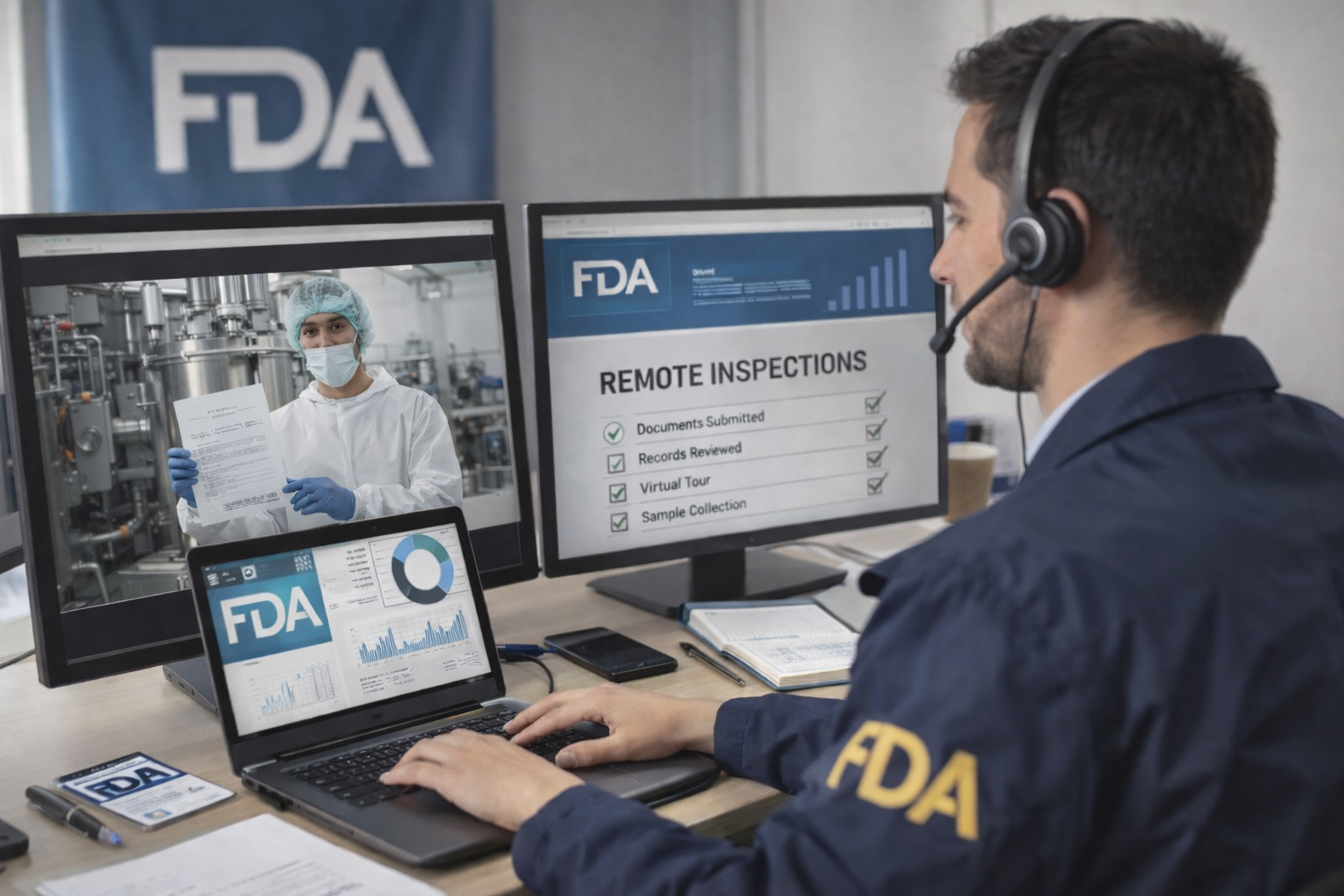
FDA Remote Oversight Model
What Are Remote FDA Regulatory Assessments (RRA)
The FDA uses Remote Regulatory Assessments (RRA) to evaluate compliance without being physically onsite. These assessments rely on live video interactions, document sharing, and real-time communication to review quality systems, manufacturing operations, and data integrity.
RRA is not conducted under the same legal authority as a traditional inspection and does not result in a Form 483. However, it is a critical regulatory tool used by FDA to gather information, assess risk, and determine whether further action—such as an onsite inspection—is necessary.
During an RRA, FDA may request access to electronic systems, review batch records, evaluate CAPA and investigations, and conduct interviews with subject matter experts. The agency is focused on how well your systems function in practice, not just whether procedures exist.
Because RRA evaluates real-time performance and system credibility, manufacturers must be prepared to demonstrate consistency, control, and transparency across all operations.
Not an Inspection, Still High Risk
RRA vs FDA Inspection: What’s the Difference
Remote Regulatory Assessments (RRA) and FDA inspections serve different regulatory purposes, but both can have a significant impact on your organization.
An FDA inspection is conducted under Section 704 of the FD&C Act. Investigators issue a Form 482, perform onsite evaluation, and may issue a Form 483 if observations are identified. Inspections are mandatory, and refusal to permit inspection is a prohibited act.
In contrast, RRA is not a formal inspection. It is conducted remotely using video, document sharing, and interviews. No Form 482 or Form 483 is issued directly from an RRA, and participation is technically voluntary.
However, RRA should not be treated as low risk. FDA uses it to assess compliance, verify system performance, and identify potential concerns. Refusal or poor performance during an RRA may increase the likelihood of a future onsite inspection or further regulatory action.
Both require preparation, but RRA demands strong real-time performance and system transparency.
Scope of FDA Remote Review
What FDA Evaluates During Remote Assessments
During a Remote Regulatory Assessment (RRA), FDA evaluates how well your systems operate in real time across multiple areas of compliance. The focus is not just on procedures, but on execution, consistency, and data credibility.
FDA typically reviews:
-
Quality systems under CGMP (21 CFR 210/211) or QMSR (21 CFR 820)
-
CAPA effectiveness and investigation quality
-
Data integrity, electronic systems, and record control
-
Manufacturing operations and process controls
-
Facilities through live video walkthroughs
-
Documents, records, and system access during real-time review
These assessments require organizations to demonstrate control, traceability, and the ability to retrieve and explain information immediately. FDA is evaluating how well your systems function under live conditions, including how data aligns with procedures and how personnel respond to questions.
Gaps in system integration, delayed responses, or inconsistent explanations can quickly raise concerns and increase the likelihood of further regulatory action.
Core Areas Evaluated During RRA
Real-Time System Evaluation
FDA evaluates how your systems perform live, including data retrieval, responses, and system integration.
Comprehensive Data Review
Assessment of data integrity, electronic systems, and alignment between records, procedures, and operations.
Quality Systems Assessment
Evaluation of CGMP or QMSR systems, including CAPA, investigations, and management oversight.
Live Video Walkthroughs
Remote facility review to assess operations, controls, and consistency with documented procedures.
Document and System Access
Real-time access to records, batch data, and quality systems to verify traceability and control.
Risk-Based Evaluation
FDA focuses on high-risk areas, including recurring deviations, data integrity, and system weaknesses.
Investigator-Level Interaction
Direct questioning of SMEs to assess knowledge, consistency, and system understanding.
System Performance Under Review
FDA evaluates whether systems function effectively—not just whether they exist.
Real-Time Performance Matters
Why Most Companies Fail Remote FDA Assessments
Remote FDA Regulatory Assessments expose how well your systems perform in real time. Unlike traditional inspections, there is no delay to retrieve documents, align responses, or correct inconsistencies. FDA evaluates your organization as it operates live.
Common failure points include:
-
Slow or incomplete document retrieval
-
Inconsistent responses from subject matter experts (SMEs)
-
Weak data integrity controls and poor system integration
-
Ineffective or staged video walkthroughs
-
Systems that appear compliant on paper but fail under real-time review
These issues quickly undermine credibility and raise concerns about overall system control.
Remote assessments require speed, consistency, and full system alignment. Without proper preparation, gaps become immediately visible and may increase the likelihood of further regulatory action or onsite inspection.
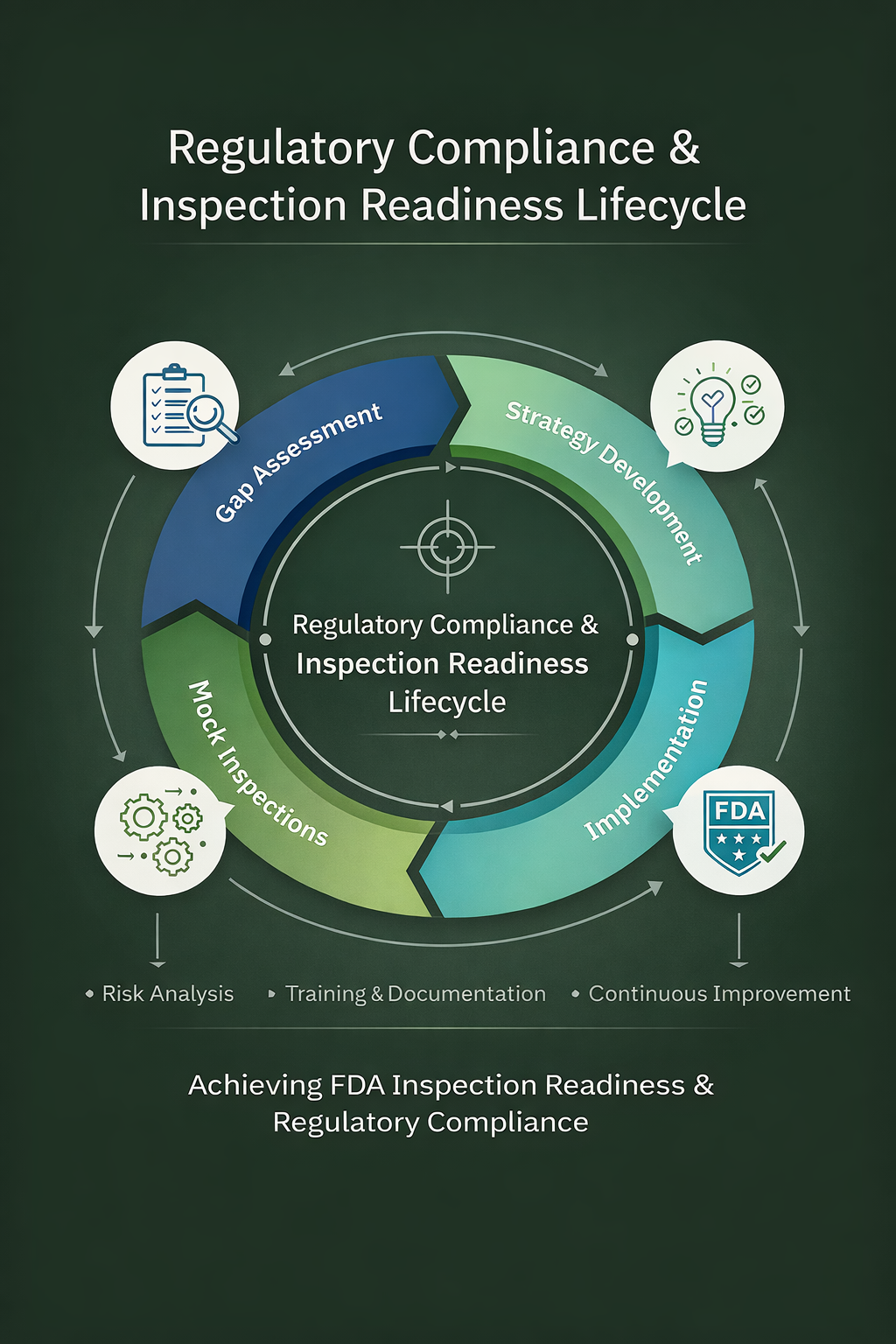
Key Evaluation Areas in Remote FDA Assessments
- Quality Systems (CGMP/QMSR)
- Corrective and Preventive Actions (CAPA)
- Data Integrity and Electronic Systems
- Manufacturing and Process Controls
- Facility Inspections via Live Video
- Comprehensive Document Review
- Quality Systems (CGMP/QMSR)
- Corrective and Preventive Actions (CAPA)
- Data Integrity and Electronic Systems
- Manufacturing and Process Controls
- Facility Inspections via Live Video
- Comprehensive Document Review
- Quality Systems (CGMP/QMSR)
- Corrective and Preventive Actions (CAPA)
- Data Integrity and Electronic Systems
- Manufacturing and Process Controls
- Facility Inspections via Live Video
- Comprehensive Document Review
Prepare for Your Remote FDA Assessment
Remote FDA Regulatory Assessments can be scheduled with limited notice, leaving little time to prepare once FDA initiates contact. Organizations must be ready to perform immediately under real-time evaluation.
Preparation requires more than having procedures in place. Your systems must function consistently, your data must be accurate and accessible, and your personnel must be able to respond clearly and confidently during live interaction.
Key areas to prepare include document retrieval speed, system access, SME alignment, and the ability to conduct effective live video walkthroughs. Any delays, inconsistencies, or gaps can quickly impact FDA’s assessment of your overall compliance.
Proactive preparation allows your organization to demonstrate control, transparency, and readiness. Being prepared before FDA engagement reduces risk and positions your organization for a more successful regulatory outcome.
Contact us today!
Investigator-Level Preparation
How We Prepare You for FDA RRA
Preparing for a Remote FDA Regulatory Assessment requires more than document readiness. It requires your systems, personnel, and processes to perform under real-time FDA scrutiny.
ReadyGxP prepares your organization using a practical, inspection-driven approach that mirrors how FDA conducts remote evaluations. We focus on performance, consistency, and system credibility—not just compliance on paper.
Our preparation includes:
-
Simulated remote FDA assessment under real-time conditions
-
Live questioning and SME training to ensure consistent, accurate responses
-
Document retrieval stress testing to verify speed and traceability
-
System and facility walkthrough preparation for live video evaluation
-
Gap identification with targeted remediation aligned to FDA expectations
This approach ensures your team is not only prepared to respond—but able to demonstrate control, confidence, and system integrity during the assessment.
Step 1
Step 1: Simulated FDA RRA
Conduct a full remote assessment under real FDA conditions, including live video, document requests, and system access. This simulation mirrors how FDA evaluates your operations in real time.
Step 2
Step 2: SME Performance Training
Train Subject Matter Experts (SMEs) to respond accurately, consistently, and confidently under live questioning. Focus is placed on clarity, alignment with records, and avoiding inconsistent or unsupported responses.
Step 3
Step 3: System Performance Testing
Test your quality systems, data integrity, and document retrieval under live conditions. Identify gaps in speed, traceability, and system integration before FDA does.
Why RRA Requires Specialized FDA Consulting
Remote Regulatory Assessments require a different level of preparation than traditional audits or internal reviews. FDA is not only reviewing documentation, they are evaluating how your systems perform in real time, how your personnel respond under questioning, and whether your data is consistent across systems.
Standard internal audits focus on procedures and compliance gaps. RRA focuses on execution, speed, and system credibility during live interaction. Delays in retrieving records, inconsistent answers from SMEs, or gaps between data and procedures can quickly raise concerns.
RRA also introduces technical challenges, including live video walkthroughs, remote access to systems, and real-time document sharing. These elements require coordination, planning, and rehearsal to ensure a controlled and professional presentation.
Specialized FDA consulting ensures your organization is prepared not just to respond, but to demonstrate control, consistency, and confidence under live regulatory review.