
Medical Devices
CIRG provides FDA Consulting for medical device manufacturers navigating the Quality Management System Regulation (QMSR), 21 CFR Part 820, ISO 13485:2016, and MDSAP requirements. We help companies prepare for FDA inspections under Compliance Program CP 7382.850 and strengthen inspection readiness across their quality systems. Our support also helps manufacturers align FDA expectations with global quality system and audit requirements.
FDA Quality Management System Regulation (QMSR)
FDA’s Quality Management System Regulation (QMSR) became effective on February 2, 2026, replacing the former Quality System Regulation framework. The revised 21 CFR Part 820 incorporates ISO 13485:2016 by reference. It also aligns FDA requirements more closely with global quality standards. However, ISO 13485 certification alone does not establish full FDA compliance. Manufacturers must also meet applicable requirements under the Federal Food, Drug, and Cosmetic Act and other FDA regulations. FDA replaced QSIT with the inspection process described in Compliance Program CP 7382.850. This change affects how manufacturers should prepare for inspections and demonstrate effective quality system controls with greater confidence. CIRG provides FDA Consulting that helps medical device companies evaluate QMSR readiness, identify compliance gaps, and strengthen inspection preparation. Our approach focuses on practical implementation, documented evidence, risk management, and the areas FDA investigators may examine during an inspection.
Understanding FDA QMSR and 21 CFR Part 820
FDA’s Quality Management System Regulation (QMSR) became effective on February 2, 2026. It amended 21 CFR Part 820 and incorporated ISO 13485:2016 by reference. The change aligns FDA’s device CGMP framework more closely with global quality management requirements. However, manufacturers still must meet all applicable FDA statutes and regulations. QMSR also incorporates Clause 3 of ISO 9000:2015 for defined terms. FDA now expects manufacturers to maintain an integrated, risk-based quality management system. Quality processes should support consistent product quality, regulatory compliance, and patient safety. CIRG provides FDA Consulting to help manufacturers evaluate QMSR implementation and identify practical compliance gaps. We review procedures, records, management controls, and supporting evidence against current FDA expectations. Our approach focuses on what the quality system actually demonstrates during an inspection, not simply what the written procedures promise. This preparation connects written controls with inspection evidence.
ISO 13485 Compliance Is Not the Same as FDA Compliance
ISO 13485 certification supports a strong medical device quality system, but it does not establish full FDA compliance. FDA states that ISO 13485 certification alone does not ensure compliance with QMSR. Manufacturers must also meet applicable requirements in the FD&C Act and FDA’s implementing regulations. FDA does not accept an ISO certificate instead of conducting its own compliance assessment. An FDA inspection also does not result in ISO 13485 certification. This distinction matters for companies that rely heavily on successful third-party audits. A certification audit may not evaluate every FDA-specific requirement that applies to the manufacturer. CIRG FDA Consulting helps companies identify those gaps before an FDA investigator does. We compare quality system controls with QMSR and other applicable FDA requirements. That review can expose weaknesses in documentation, reporting, records, management oversight, and regulatory execution before they become inspection findings.
FDA Medical Device Inspections Under CP 7382.850
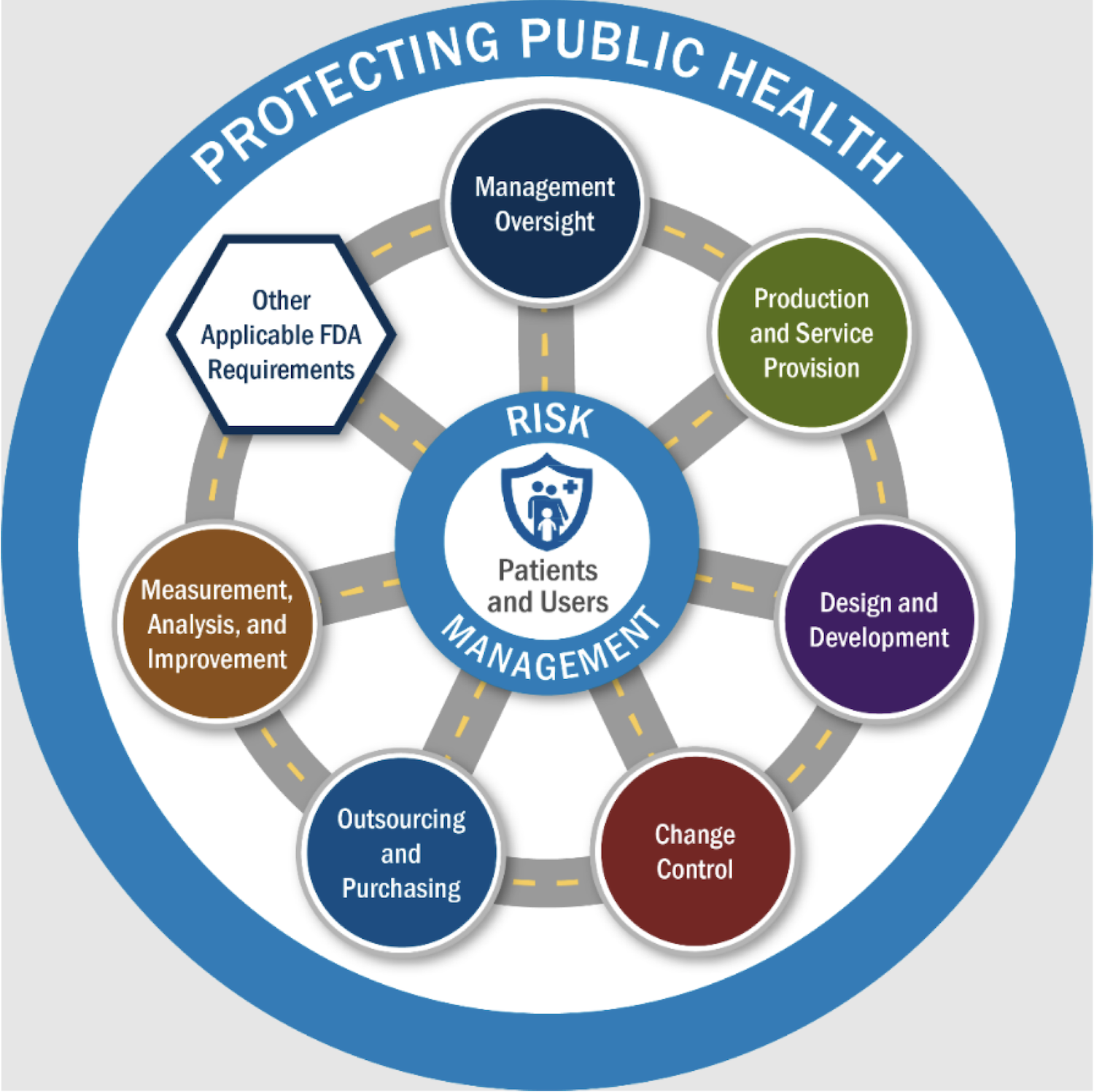
FDA now conducts medical device manufacturer inspections under Compliance Program CP 7382.850. FDA stopped using QSIT when QMSR became effective on February 2, 2026. CP 7382.850 uses a risk-based approach that reflects the interconnected nature of a modern quality management system. FDA organizes the inspection process into six QMS areas and four Other Applicable FDA Requirements. Investigators may follow connections across processes when risk signals justify a deeper review. The program also covers requirements beyond Part 820, including MDR, corrections and removals, registration, listing, UDI, and device tracking. FDA can review management review, internal audit, and supplier audit records under QMSR. CIRG FDA Consulting helps manufacturers prepare for this broader inspection environment. We focus on evidence, risk, process effectiveness, and the records investigators can use to evaluate compliance. Effective preparation requires understanding how evidence connects across the entire quality system.
Preparing for an FDA QMSR Inspection
Preparing for a QMSR inspection requires more than updating procedures or completing an ISO 13485 audit. FDA recommends that firms prepare to discuss and provide records demonstrating compliance with QMSR. Manufacturers should understand how their quality processes connect and where risk can move across the system. Management oversight, CAPA, complaints, supplier controls, design activities, production controls, and postmarket information all deserve attention. Inspection readiness should also include applicable FDA requirements outside Part 820. CIRG FDA Consulting helps companies test these systems before the investigator arrives. We review records, trace evidence across processes, challenge weak justifications, and identify gaps that may attract FDA attention. Mock inspection techniques can also test staff readiness and document retrieval. The goal is not a polished presentation. The goal is a quality system that can withstand detailed, risk-based regulatory scrutiny. Strong preparation also improves management consistency.
Medical Device Single Audit Program (MDSAP)
The Medical Device Single Audit Program (MDSAP) allows a recognized Auditing Organization to conduct one regulatory audit for participating jurisdictions. The audit evaluates a manufacturer’s quality management system against applicable regulatory requirements. FDA participates in MDSAP and may accept qualifying MDSAP audit reports instead of routine Agency surveillance inspections. However, MDSAP participation does not remove FDA’s inspection authority. FDA states that QMSR inspections do not follow the MDSAP audit plan or procedures. An ISO 13485 certificate also does not exempt a manufacturer from an FDA inspection. Companies therefore need to understand both systems and the differences between them. CIRG FDA Consulting can support MDSAP readiness without acting as an MDSAP Auditing Organization. We help manufacturers evaluate quality system alignment, address gaps, strengthen documentation, and prepare teams for regulatory audits. This approach supports global consistency while preserving clear FDA-specific inspection readiness.
FDA Medical Device Compliance Support
Medical device compliance requires ongoing attention to quality systems, regulatory obligations, and inspection readiness. CIRG provides FDA Consulting across QMSR, 21 CFR Part 820, ISO 13485, MDSAP readiness, and CP 7382.850 preparation. Support can include gap assessments, mock FDA inspections, CAPA review, complaint handling, supplier controls, management review, and internal audit readiness. We can also evaluate FDA-specific requirements such as MDR, corrections and removals, registration, listing, and UDI obligations. The objective is to identify meaningful compliance weaknesses before they become regulatory problems. Our work focuses on evidence, process effectiveness, risk, and practical implementation. We do not treat compliance as a checklist exercise. Each engagement considers the manufacturer’s products, operations, history, and regulatory exposure. That approach helps companies strengthen quality systems while preparing for the way FDA actually evaluates medical device manufacturers. CIRG can tailor support to each manufacturer’s regulatory risk.
Medical Device Compliance Through an FDA Inspection Perspective
Medical device compliance looks different when viewed through an FDA inspection perspective. Investigators do not evaluate procedures in isolation. They follow records, risk signals, process connections, and evidence to determine whether the quality system works. A strong inspection strategy therefore starts with understanding how FDA evaluates compliance under CP 7382.850. CIRG FDA Consulting draws on direct FDA inspection and compliance experience when preparing medical device manufacturers. We examine how documents connect to actual practices and how employees explain those practices under questioning. Particular attention goes to evidence supporting management oversight, corrective action, complaint handling, supplier control, design activities, and production controls. We also consider applicable FDA requirements outside Part 820. The objective is straightforward: identify weaknesses before FDA finds them and strengthen the system before those weaknesses become observations, regulatory actions, or costly remediation projects. That perspective keeps preparation focused.
Contact Us
Need help with QMSR, ISO 13485, MDSAP readiness, or an upcoming FDA medical device inspection? CIRG provides practical FDA Consulting for medical device manufacturers that need clear, experienced regulatory support. We can assess compliance gaps, review quality system weaknesses, prepare your team for inspection, or conduct a mock FDA inspection. Our approach focuses on the issues that matter most during regulatory review. We work with your existing quality system and help strengthen areas that create unnecessary compliance risk. Whether you need targeted support or a broader readiness assessment, we can tailor the engagement to your operation.
Contact CIRG today to discuss your medical device compliance needs and determine the right next step.