
Virtual CGMP Inspection Readiness
Remote FDA Drug Inspections
Remote FDA Drug Inspections allow the FDA to evaluate pharmaceutical manufacturers without being physically onsite. Using live video, document sharing, and real-time interaction, FDA reviews CGMP compliance, quality systems, manufacturing operations, and data integrity.
Although conducted remotely, these inspections carry the same level of scrutiny as onsite inspections. FDA assesses how well your systems perform in real time, including your ability to retrieve records, explain processes, and demonstrate control across operations.
Remote inspections require speed, consistency, and full alignment between procedures, data, and personnel. Delays, inconsistencies, or gaps can quickly raise concerns and lead to further regulatory action.
ReadyGxP prepares drug manufacturers for remote FDA inspections by focusing on real-time performance, system integration, and how investigators evaluate CGMP compliance in practice.
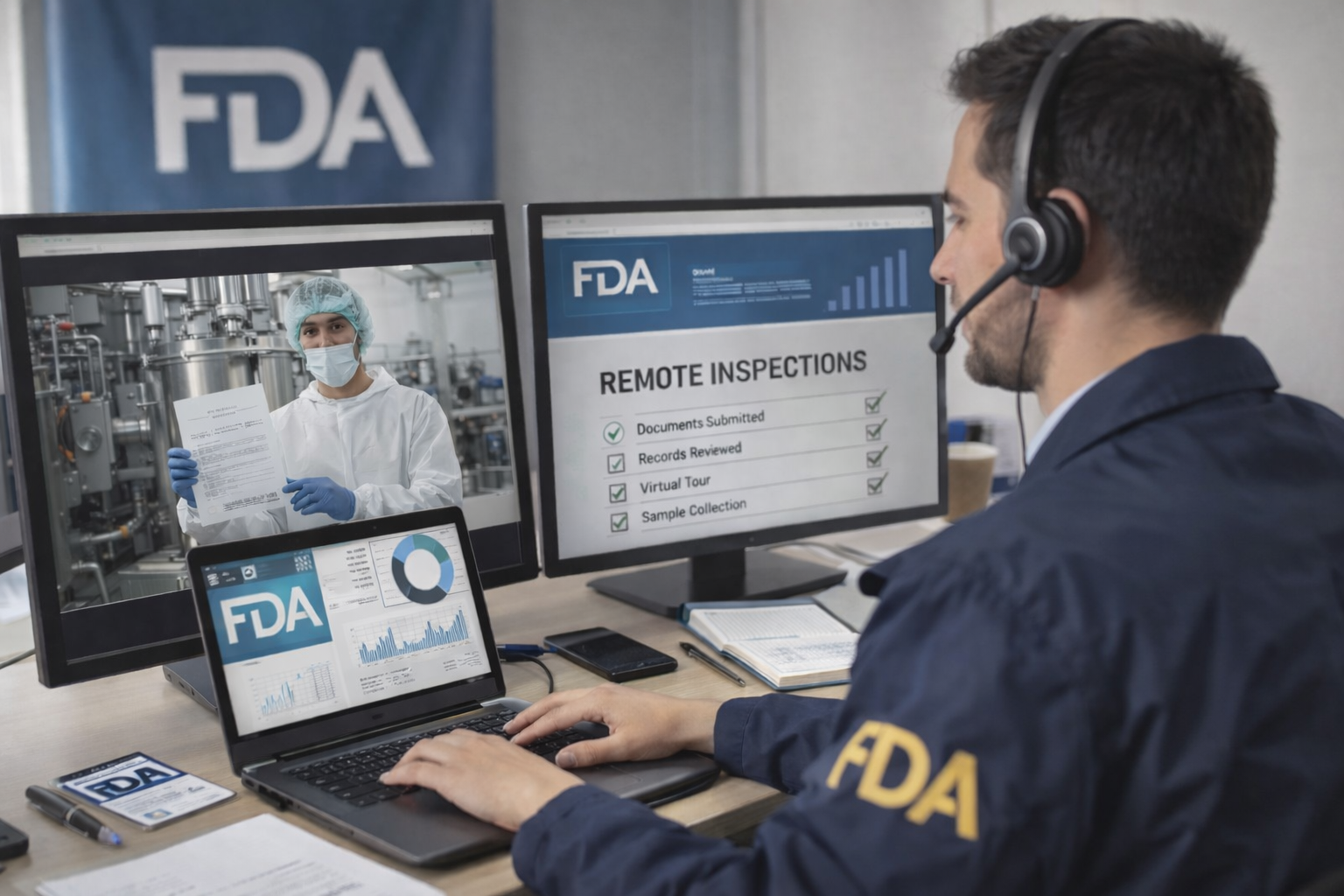
CGMP System Evaluation
What FDA Evaluates in Remote Drug Assessments (21 CFR 210/211)
During remote FDA drug inspections, investigators evaluate compliance with 21 CFR Parts 210 and 211 across your quality systems and manufacturing operations. The focus is not limited to documentation. FDA assesses how systems function in real time, including data access, process understanding, and operational control.
This includes review of batch records, quality systems, investigations, and supporting documentation through live interaction. FDA also evaluates how information is retrieved, explained, and supported by evidence.
Remote assessments require your organization to demonstrate consistency between procedures, data, and actual practices. Any gaps between documented processes and real-time responses can raise concerns and lead to further regulatory action.
Data Integrity and System Reliability
Data Integrity and CGMP Expectations in Remote Drug Inspections
Data integrity is a primary focus during remote FDA assessments. Investigators evaluate whether your data is complete, accurate, and reliable, and whether it supports CGMP compliance across all systems. This includes electronic systems, laboratory data, batch records, and audit trails. FDA expects data to meet ALCOA+ principles and be readily accessible during live review. Inconsistent records, delayed retrieval, or gaps between systems can quickly undermine credibility. Remote assessments make these issues more visible, as the FDA can directly observe how data is accessed and explained. Strong data governance and system integration are critical to demonstrating control and maintaining compliance under real-time FDA evaluation.
Investigation and CAPA Effectiveness
CAPA, Deviations, and Investigation Readiness
FDA evaluates how effectively your organization manages deviations, investigations, and CAPA. The focus is on root cause, timeliness, and whether corrective actions prevent recurrence. During remote inspections, investigators may request specific deviations or CAPAs and expect immediate access and a clear explanation. They assess whether investigations are thorough, scientifically justified, and supported by data. Superficial root cause analysis, repeated issues, or weak CAPA effectiveness are common findings. These gaps often indicate a reactive system rather than a mature quality approach. Your team must be able to explain investigations clearly and demonstrate how issues are identified, analyzed, and resolved in a consistent and controlled manner.
Operational Control and Execution
Manufacturing and Process Control Review
FDA evaluates manufacturing operations to determine whether processes are controlled, consistent, and compliant with CGMP requirements. This includes process validation, in-process controls, equipment use, and adherence to procedures.
Through live video walkthroughs, the FDA may observe production areas, equipment, and workflows. Investigators assess whether operations align with documented procedures and whether controls are effectively implemented.
They may also review batch execution, material flow, and process monitoring to ensure consistency and traceability.
Any discrepancies between what is documented and what is observed can raise concerns about overall system control and operational reliability.
Common Failures in Remote FDA Drug Assessments
Remote FDA inspections expose weaknesses quickly because everything is evaluated in real time.
Common failure points include slow document retrieval, inconsistent SME responses, and gaps in data integrity. Systems that appear compliant on paper often fail when tested under live conditions.
Other issues include poorly executed video walkthroughs, a lack of coordination between teams, and an inability to explain processes clearly.
These gaps reduce credibility and increase the likelihood of further regulatory action. Remote assessments require alignment across systems, data, and personnel to demonstrate control and compliance effectively.
Practical FDA Preparation
How We Prepare Drug Manufacturers for Remote FDA Inspections
Preparing for remote FDA inspections requires more than documentation review. Your systems, personnel, and processes must perform under real-time regulatory scrutiny.
ReadyGxP prepares drug manufacturers through simulated remote assessments that mirror FDA expectations. This includes live questioning, document retrieval testing, and system walkthrough preparation.
We focus on strengthening data integrity, improving CAPA effectiveness, and ensuring alignment across quality systems. SMEs are trained to respond clearly and consistently, supported by accurate and accessible data.
Our approach ensures your organization can demonstrate control, confidence, and compliance during remote FDA evaluation, not just on paper, but in practice.