
Why FDA Consulting Matters

The FDA does not operate like a typical organization—it enforces the law through structured, evidence-based evaluation of your systems, data, and decisions. Understanding how FDA thinks, prioritizes risk, and interprets compliance is critical. This is not about memorizing regulations. It is about knowing how those regulations are applied in real situations. FDA evaluates consistency, control, and credibility across your entire operation. Small gaps, unclear decisions, or inconsistent records can quickly become larger concerns. This is where FDA consulting becomes valuable. Former FDA professionals understand how inspections and regulatory decisions actually unfold. They provide practical guidance based on real experience, helping your organization align with FDA expectations before issues escalate. Without that perspective, companies often misjudge risk, respond incorrectly, or lose control under pressure. Understanding FDA is not optional—it directly impacts your ability to operate, respond, and remain compliant.
FDA Perspective
Understanding FDA’s Role: Not an Ally, Not an Adversary
FDA is not positioned to support or oppose your business—it enforces the law. Different parts of FDA have different missions. Centers such as CDER, CDRH, and CBER focus on product evaluation, approvals, and availability. They may work with you to bring safe and effective products to market and help prevent shortages. However, the Office of Inspections and Investigations (OII) operates differently. OII’s role is enforcement. It evaluates whether your operations are in control and whether your products meet regulatory requirements in practice—not theory. A “bad product” is not defined only by defects. It is defined by loss of control: unreliable data, inconsistent processes, and unsupported decisions. When control is lost, risk increases. FDA acts based on that risk. Understanding this distinction is critical to managing compliance and avoiding escalation.
FDA Centers Focus on Product Availability and Approval
FDA centers such as CDER, CDRH, and CBER are responsible for reviewing submissions, evaluating data, and making regulatory decisions related to product approval and market access. Their objective is to ensure that safe and effective products reach patients without unnecessary delay. They may engage with sponsors during development, provide feedback, and help address scientific or regulatory challenges. In some cases, they also consider broader public health needs, including drug shortages or access to critical therapies. However, their role is still grounded in evidence. They do not assume compliance—they rely on data submitted and verified through other parts of FDA.
OII Focuses on Control, Not Intent
The Office of Inspections and Investigations (OII) does not evaluate your intentions or your internal understanding of compliance. It evaluates what your system produces. Investigators assess whether your operations are controlled, consistent, and supported by objective evidence. They follow records, compare actions to procedures, and look for gaps in execution. If your data cannot support your decisions, or if processes are not followed as written, control is considered weak. Once control is questioned, the scope expands. OII’s role is to identify risk and determine whether your operation can reliably produce compliant products under real conditions.
“Bad Product” Means Loss of Control
FDA does not define a “bad product” only by visible defects or failures. A product becomes “bad” when the system that produces it is not in control. This includes unreliable or incomplete data, weak investigations, inconsistent processes, and unsupported conclusions. Even if the product appears acceptable, lack of control creates risk that cannot be justified. FDA acts on that risk. When systems fail to demonstrate consistency and traceability, confidence is lost. That is when regulatory actions begin. Control is not theoretical—it must be demonstrated through records, decisions, and outcomes that hold under scrutiny.
Build Credibility with FDA Centers Through Partnership
For drug and medical device manufacturers, the better approach is to earn credibility and work constructively with FDA centers. This is not about “alignment” or informal relationships—it is about demonstrating transparency, scientific rigor, and control. When your data is reliable and your decisions are well-supported, centers are more effective in reviewing, guiding, and moving your product forward. Early engagement, clear communication, and consistent execution build trust over time. This positions your organization to navigate regulatory expectations more efficiently. In contrast, weak systems or inconsistent data create friction, delay decisions, and increase scrutiny across both review and inspection functions.
U.S. Legal Framework
How the FDA Operates Within the U.S. Legal and Enforcement System
To truly understand how FDA functions, you must understand the U.S. legal system it operates within. FDA is not just a regulatory body—it is part of the federal enforcement structure under the FD&C Act and related laws. Its authority comes from statute, not guidance or preference. Inspections, records access, and enforcement actions are grounded in legal jurisdiction. This includes domestic authority and, for foreign manufacturers, access tied to entry into the U.S. market. FDA’s actions are supported by evidence, documented findings, and legal standards that can lead to warning letters, import alerts, seizures, or injunctions. Understanding how these mechanisms work is critical, especially for foreign firms unfamiliar with U.S. enforcement expectations. This is where FDA consulting provides value—translating legal authority into practical, operational control.
FDA Authority Is Based on Law, Not Interpretation
FDA operates under federal law, primarily the FD&C Act, which defines its authority to inspect, collect evidence, and take enforcement action. This authority is not optional or negotiable. Investigators act within defined legal boundaries, and their findings must be supported by evidence. Guidance documents explain expectations, but enforcement is based on statute and regulation. Companies that misunderstand this distinction often rely too heavily on interpretation instead of control. Compliance is not about opinions—it is about meeting legally enforceable requirements supported by records, actions, and consistent execution across operations.
Jurisdiction Extends to Foreign Manufacturers
FDA jurisdiction is not limited to the United States. Any manufacturer supplying products to the U.S. market falls under FDA authority. For foreign firms, access to the U.S. market comes with conditions—inspection, records access, and compliance with applicable regulations. FDA may inspect overseas facilities or take action at the border through import alerts and refusals. Lack of compliance can immediately impact market access and distribution. Foreign manufacturers must understand that FDA expectations apply equally, regardless of location, and enforcement actions can occur without physical presence in the U.S.
Enforcement Follows Evidence and Process
FDA enforcement is structured and evidence-driven. Observations, warning letters, and legal actions are built on documented findings collected during inspections and investigations. Investigators gather records, compare data, and assess whether systems are in control. If deficiencies are identified, FDA follows a defined escalation process based on risk and severity. This can include regulatory correspondence, product actions, or legal enforcement. Understanding how this process works allows companies to respond appropriately and avoid escalation. FDA consulting helps interpret findings, guide responses, and maintain control within the framework of U.S. enforcement.
Legal Exposure Mindset
Design Your Quality System to Withstand Legal Scrutiny
CAPA, complaint handling, recalls, deviations, change control, supplier qualification, and validation are not just quality activities—they are legal records. In the U.S., every decision, investigation, and conclusion must be defensible under the FD&C Act and related enforcement authorities. The standard is simple: can your records stand on their own if reviewed by regulators, attorneys, or a judge? Well-written procedures or mature systems do not carry weight if execution is inconsistent or conclusions are unsupported. FDA documents findings with this reality in mind—what is written, what was done, and whether the evidence supports it. Weak investigations, vague root causes, or incomplete records create exposure. Strong systems demonstrate traceability, consistency, and objective evidence from start to finish. The goal is not to look compliant internally—it is to be defensible externally under legal scrutiny.
Execution Under Scrutiny
How to Build Defensible Investigations and Records
Once you understand the legal exposure, execution becomes the priority. CAPA, complaints, deviations, recalls, and change controls must be structured with one standard in mind—can this stand on its own under scrutiny? Investigations must move beyond conclusions and demonstrate how those conclusions were reached. Every step must be traceable, supported, and consistent with the data. Weak documentation, gaps in logic, or unexplained decisions create risk regardless of intent. The goal is not to complete an investigation—it is to show control from start to finish. This requires disciplined thinking, clear documentation, and alignment across functions. Each record must tell a complete and defensible story. If challenged, it should hold without explanation. Strong execution reduces exposure, supports credibility, and ensures your system performs under real regulatory and legal review conditions.
Define Root Cause With Evidence
Root cause must be based on data, not assumption. Every conclusion should be supported by objective evidence that clearly explains why the issue occurred. Avoid generic or convenient answers. A defensible root cause links directly to the problem, the investigation steps taken, and the data reviewed.
Document Decisions With Clear Justification
Every decision must be explained, not implied. Records should clearly show why a decision was made, what data supported it, and who approved it. Without documented justification, decisions appear arbitrary and are difficult to defend under scrutiny. Clarity and logic are critical.
Maintain Traceability Across the System
Traceability connects the entire investigation. From issue identification to root cause, corrective action, and verification, every step must align. Gaps, inconsistencies, or missing links weaken credibility. A strong system demonstrates continuity, showing that actions, records, and outcomes are fully connected and controlled.
Common Failure Patterns
Why Companies Fail FDA Inspections Despite “Strong” Systems
Many companies believe their systems are compliant because procedures exist and audits are passed. However, failures occur during execution. FDA does not evaluate what is written—it evaluates what is done. Breakdowns typically happen in real-time response, inconsistent data, weak investigations, and poor communication control. These gaps are not always visible internally but become obvious under FDA scrutiny. A single inconsistency can expand scope and trigger deeper review. The issue is rarely lack of documentation—it is lack of control. Strong systems on paper do not protect you if execution is weak. Understanding these failure patterns allows organizations to correct them before FDA identifies them.
Inconsistent SME Responses
Different answers from different people create immediate concern. FDA follows inconsistencies, not explanations. Lack of alignment signals poor control.
Weak or Incomplete Investigations
Superficial root cause, missing data, or unsupported conclusions quickly undermine credibility. FDA expects depth, not closure.
Poor Document Control and Delays
Slow, incomplete, or conflicting records suggest disorganization. Timing and accuracy both matter during inspection.
Practical Support
How FDA Consulting Supports Your Organization
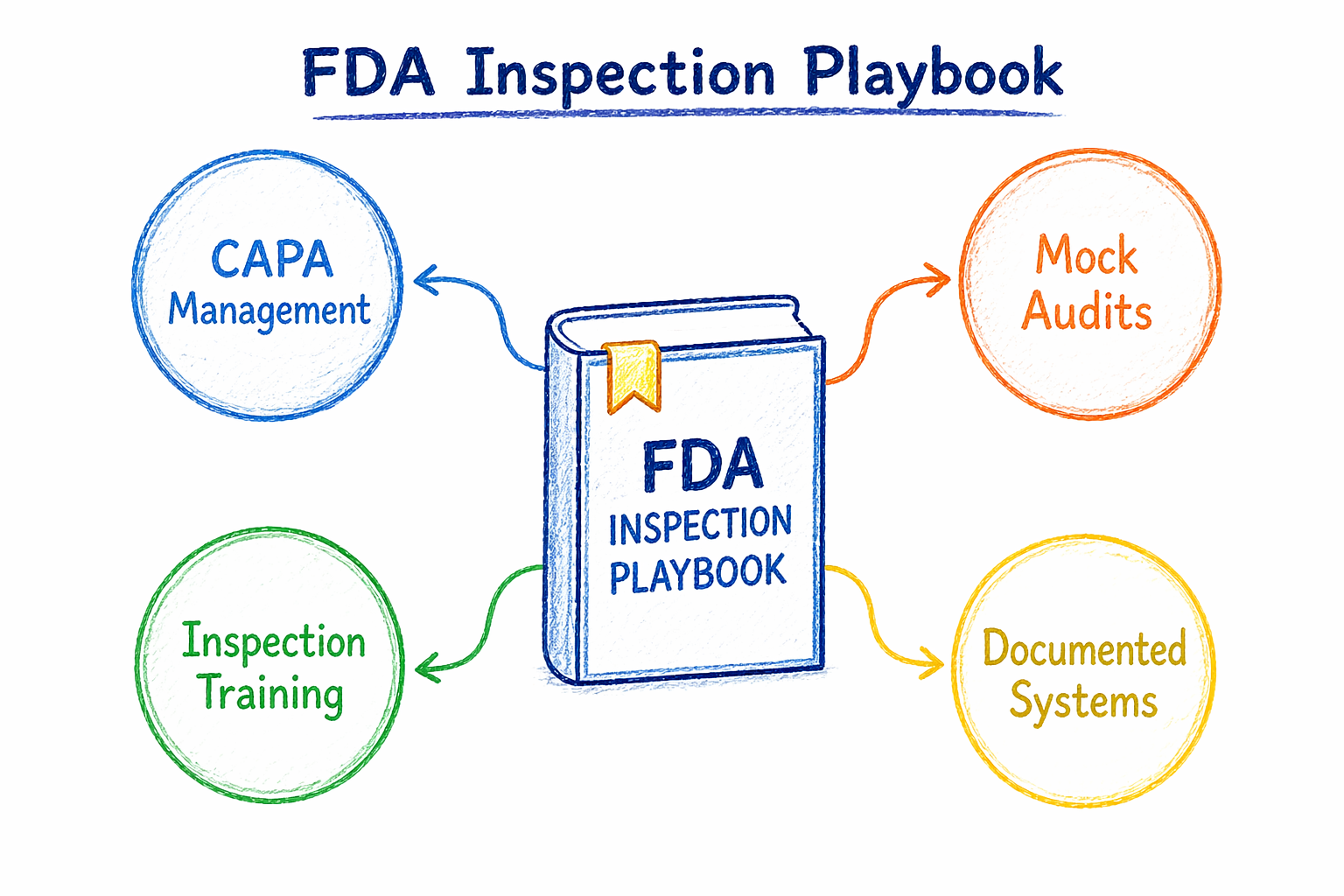
FDA consulting bridges the gap between understanding regulations and executing under real regulatory pressure. It provides practical, experience-based guidance on how FDA actually evaluates systems, data, and decisions. This includes preparing for inspections, managing real-time interactions, and strengthening critical areas such as CAPA, investigations, and documentation. Former FDA professionals bring insight into how issues are identified, escalated, and enforced, helping your organization avoid common mistakes that lead to exposure.
This is not theoretical support. It is applied, operational guidance focused on control, consistency, and defensibility. FDA consulting helps translate regulatory expectations into actions your team can execute with confidence. Whether addressing existing gaps or preparing for future scrutiny, the goal is the same—to ensure your systems perform under review and your decisions hold when challenged.